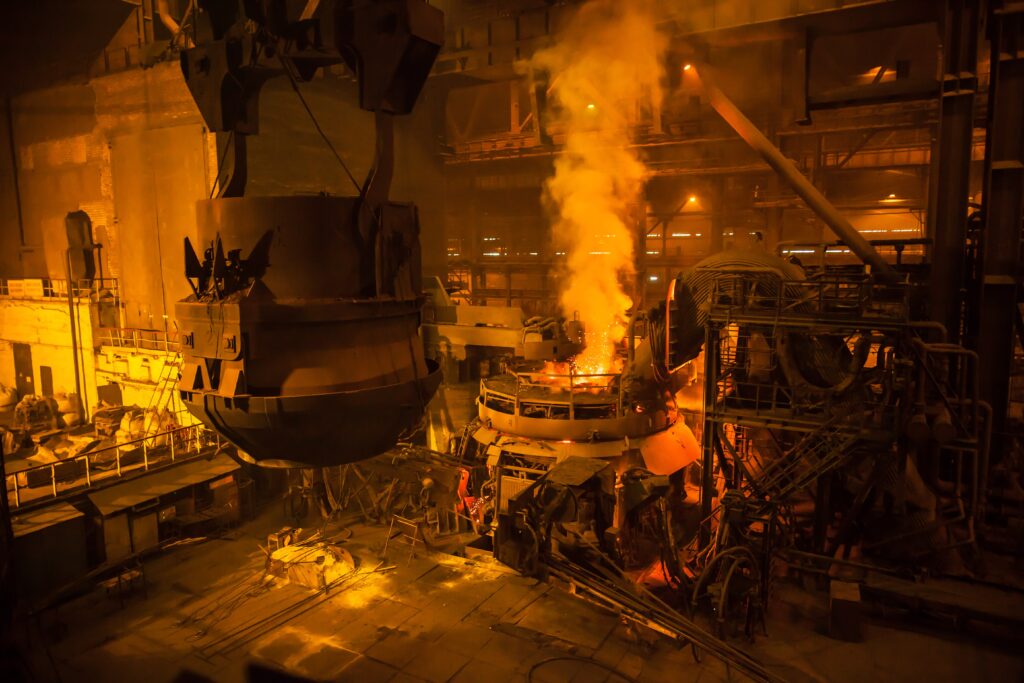
Investment in U.S. steelmaking continues to create opportunities to modernize both new and existing production facilities.
In April 2026, U.S. Steel announced a $1.9 billion direct reduced iron facility at Big River Steel Works in Arkansas, where the expanded operation includes four electric arc furnaces. The company positioned the investment as part of a broader effort to improve efficiency and strengthen its next-generation steelmaking capabilities.
Modernization is occurring within existing mills as well.
In June, Tenova announced an electric arc furnace revamp at Tenaris’ Koppel steel mill in Pennsylvania, part of more than $90 million in planned investment across the company’s Pennsylvania operations. The project includes technology designed to improve furnace cooling-water monitoring and process stability.
These projects illustrate an important reality of modern steelmaking: upgrading the furnace itself is only one part of the engineering challenge.
An EAF Project Extends Throughout the Melt Shop
An electric arc furnace interacts with numerous surrounding systems.
A furnace replacement or capacity increase can affect foundations and structural steel, electrical distribution, cooling-water systems, material handling, alloy systems, ductwork, emissions-control equipment and access for operations and maintenance.
Brownfield installations add another challenge: fitting new equipment and systems into an active production environment.
That requires careful coordination between disciplines before installation begins.
Electrical requirements must match new equipment loads. Structural systems must accommodate equipment and operational forces. Cooling-water capacity and distribution must support process requirements. Material movement must integrate into the existing shop. Constructability and outage sequencing must be considered throughout design rather than after engineering is complete.
Engineering Around Production Requirements
R.T. Patterson Company has extensive engineering experience in the steel industry, including blast furnaces, BOF shops, electric arc furnaces, rolling facilities and associated industrial systems. Its multidisciplinary capabilities include structural, electrical, piping, automation, HVAC, foundations and material handling.
That experience can be seen in RTP’s work supporting an EAF replacement and melt-shop modernization project for CMC Steel Texas.
The project included installation of a larger electric arc furnace during a 47-day outage, along with foundation modifications, electrical-distribution upgrades, water-cooled ductwork, alloy-system additions and consolidation of three existing cooling systems into a new cooling-water system capable of supplying approximately 32,000 GPM.
The project demonstrates why steel modernization requires more than equipment specification alone.
Modernizing the Entire System
As steel producers invest in productivity, reliability and new technologies, engineering teams have to consider how every supporting system interacts with the production process.
A successful EAF modernization is ultimately an exercise in integration: equipment, utilities, structures, electrical infrastructure, material flow, construction sequencing and operations all have to work together.
For owners evaluating furnace replacements, capacity improvements or broader melt-shop modernization, early multidisciplinary engineering can expose constraints before those constraints reach the construction phase.
With decades of heavy-industrial and steel-industry experience, R.T. Patterson Company provides the integrated engineering required to move complex modernization projects from concept through execution.