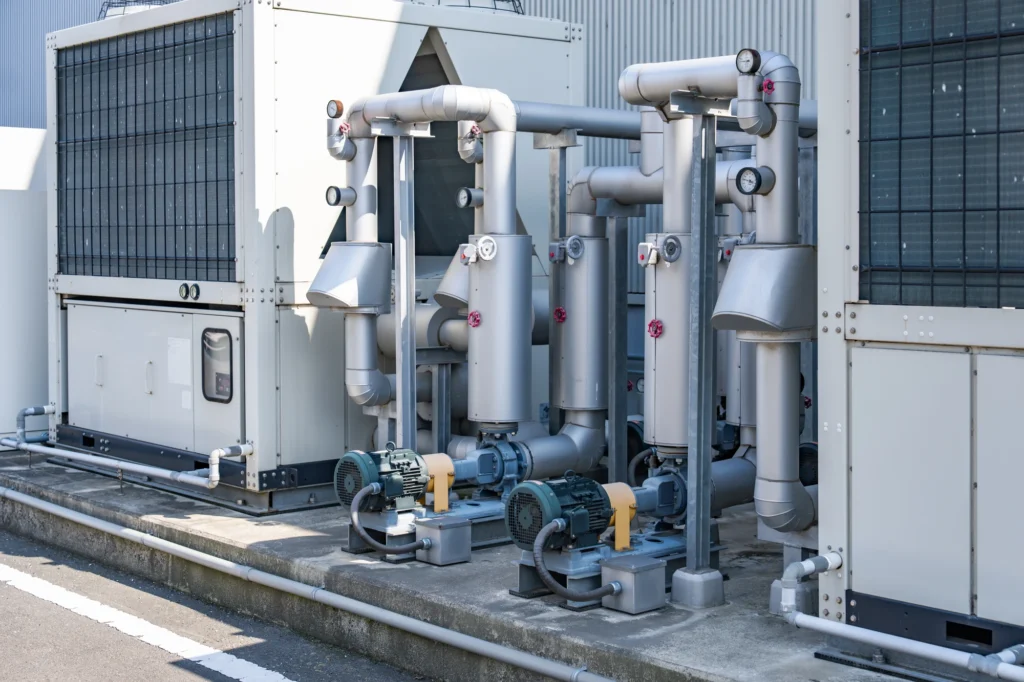
Piping is easy to overlook because much of its work happens quietly. Yet a piping system can affect production, energy use, equipment reliability, maintenance access and worker safety throughout the life of an industrial facility.
Those effects become especially important in brownfield projects, where a new line or equipment connection must work within an operating plant rather than a clear, open site.
Routing is only the beginning
A workable route must account for pressure, temperature, flow, thermal expansion, vibration, support locations, equipment nozzle loads and applicable design codes. It must also leave room for valves, instruments, insulation, drainage, fabrication, installation and future maintenance.
A route that looks efficient on a drawing may create excessive stress, block an access path or place a component where it cannot be safely operated. Piping design therefore requires constant coordination with process, mechanical, structural, civil, electrical and operations teams.
Brownfield design starts with field conditions
Existing facilities often include congested pipe racks, undocumented modifications, active equipment and limited outage windows. Record drawings are valuable, but they are not a substitute for confirming what is actually in the field.
Field verification helps the team identify clashes, elevations, connection points, support conditions and constructability concerns before fabrication. It also provides context that calculations alone cannot: how operators move through the area, where maintenance equipment must reach and which systems must remain online during installation.
Material and code choices shape long-term performance
Material selection depends on the service, operating conditions and failure mechanisms the system may face. Carbon steel, stainless steel, titanium, Hastelloy, lined systems, fiberglass-reinforced materials, HDPE, PP, PVC and CPVC each bring different strengths and limitations.
Code requirements matter as well. Our piping and mechanical engineers perform stress analysis for systems governed by standards including ASME B31.1, B31.3, B31.8 and B31.9. The applicable code sets the framework, but engineering judgment is still needed to address actual loads, support behavior, equipment limits and operating experience.
Design for the people who will operate it
Good piping design considers what happens after startup. Can a valve be reached? Can a component be removed without dismantling unrelated systems? Are low points drainable and high points vented? Can insulation be installed and repaired? Is there space for inspection and future tie-ins?
These details may appear small during design, but they shape maintenance time, outage planning and the likelihood of field modifications later.
For brownfield industrial work, successful piping design is not simply a system that fits. It is a system that performs under real operating conditions, can be built safely and remains practical to inspect and maintain for years to come.